
What Young Adults Want to Talk About on Campus


Young Adults and Campus Ministry Conversations
College students are not avoiding hard conversations because they lack opinions. Many are avoiding them because they believe the cost of speaking honestly is too high. That matters for every church that says it wants to reach young adults on campus. If students are learning to stay silent in the places where questions should be welcomed, then the church cannot answer by creating louder events with thinner discipleship. We have to become the kind of people who can be trusted with real questions.
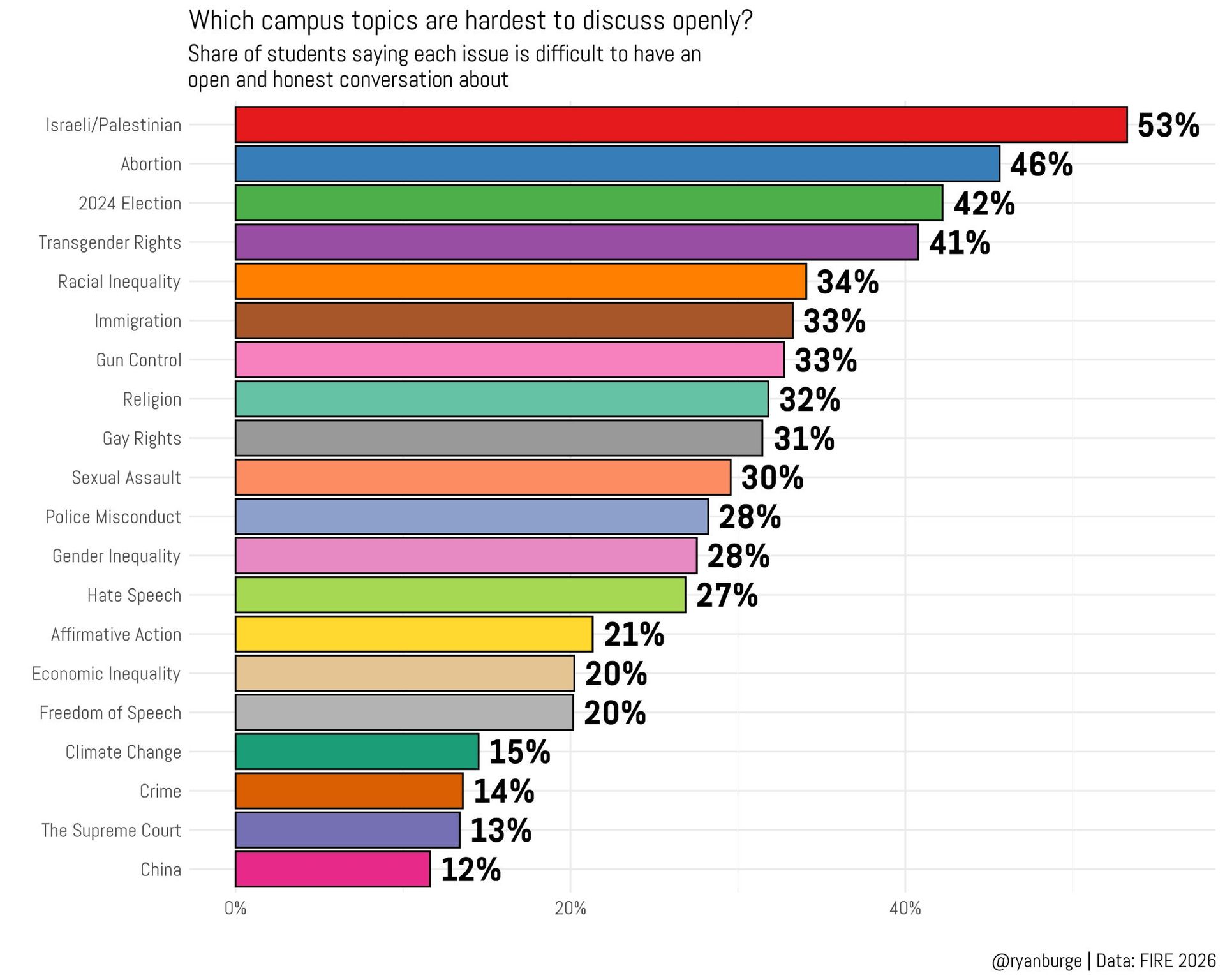
The data points us in that direction. The Foundation for Individual Rights and Expression 2026 College Free Speech Rankings surveyed 68,510 students from 257 colleges and universities. FIRE asked students which topics were difficult to discuss openly and honestly on campus. That is an important distinction. The survey did not simply ask, "What are students interested in?" It asked where conversation feels risky. In ministry terms, those are often the very places where students need mature Christians to model truth, courage, humility, and love.
Ryan Burge adds another important layer through his analysis of FIRE data in How Big Is the God Gap on College Campuses? He notes that the data includes more than 68,000 college students and shows that religious attendance still shapes political identity on campus. Students who never attend religious services lean heavily liberal, while students who attend more frequently are more politically mixed and, in the most frequent attending group, more conservative. That does not mean every young adult fits neatly into a category. It does mean that campus ministry is not happening in a neutral space. Faith, politics, identity, and belonging are already intertwined in students minds before they ever walk into a college Bible study.
That is why churches must think people, not programs. A pizza night may get students in a room, but it will not disciple them through the questions they are afraid to ask. A worship service may gather a crowd, but it will not form young adults if they leave without trusted believers who know their names, hear their fears, and walk with them toward Christ. To not reach singles is to not reach your community, and most college students and young adults are single adults. The U.S. Census Bureau reported that the median age at first marriage is now 30.8 for men and 28.4 for women. It also reported 39.7 million one person households, 29 percent of all households. Churches near campuses are not only reaching future families. They are reaching present neighbors, present leaders, present disciple makers, and present mission fields.
Table for One Ministries has long said that marriage is not the finish line. Being complete in Christ is not a relationship status. It is a life choice rooted in a relationship with Jesus. That truth matters deeply for campus ministry because young adults are trying to decide not only what they believe, but who they are becoming. They need churches that are not afraid of hard conversations, but also are not consumed by them. The goal is not to win arguments. The goal is to make disciples who can trust Christ, know Christ, and reflect Christ in a world that often teaches them to curate, perform, and hide.
The Data Is Telling Us Something, But We Have to Listen Carefully
The FIRE data tells us that the most difficult campus conversations are not random. They cluster around human life, human dignity, identity, justice, politics, violence, and global conflict. In other words, students are not merely asking abstract questions. They are asking questions about people. They are asking what to do with classmates who think differently, friends who are hurting, families divided by politics, and moral issues that feel personal before they feel theoretical.
This is where the church must resist two unhelpful instincts. The first is avoidance. Some churches avoid these topics because they do not want conflict. The second is overreaction. Some churches address these topics only as culture war talking points. Neither approach forms young adults well. Avoidance teaches students that the church has nothing to say when life gets complicated. Overreaction teaches students that people are projects to correct rather than neighbors to love.
The way of Christ is different. Scripture calls believers to speak with grace and truth. Paul wrote, "Let your speech always be gracious, seasoned with salt" (Colossians 4:6, ESV). Peter told believers to be prepared to give a defense of the hope within them, but to do so "with gentleness and respect" (1 Peter 3:15, ESV). That is not weakness. That is Christian maturity. Young adults do not need churches that whisper when Scripture speaks, but they also do not need churches that confuse boldness with harshness.
The spiritual hunger among young adults is real, but it is not always expressed through traditional attendance patterns. Springtide Research Institute surveyed 2,977 young people ages 13 to 25 in 2025 and found that 46 percent describe themselves as very or moderately religious, while 50 percent describe themselves as very or moderately spiritual. About three quarters claim some religious identity or affiliation. At the same time, only about one third of young adults ages 18 to 25 attend religious services monthly. That means churches cannot assume disinterest. Many young adults are spiritually open, relationally cautious, and institutionally selective.
The church should hear that clearly. Young adults are not asking us to make the Bible relevant by changing the Bible. The Word of God has never had to change to meet their hunger. They are asking whether the people who carry the Bible are willing to sit at the table long enough to listen, tell the truth, and stay in relationship after the conversation gets hard.
The Top Seven Campus Conversations Churches Cannot Avoid
According to the FIRE survey, these were the seven most difficult topics for college students to discuss openly and honestly on campus. The percentages below represent students who selected each topic as difficult to discuss. Churches that want to reach young adults on campus need to understand both the topic and the discipleship opportunity beneath it.
1. Israeli and Palestinian conflict
This topic is the most difficult conversation in the FIRE data, with 53 percent of students identifying it as hard to discuss. It is also a reminder that campus ministry is global whether the church planned for it or not. Many campuses include Jewish students, Muslim students, Arab students, Israeli students, international students, veterans, activists, and students who feel pressure to speak before they have had time to understand.
Churches should not respond with careless hot takes. They should respond with prayer, humility, moral seriousness, and a commitment to human dignity. Students need leaders who can say that antisemitism is evil, hatred toward Muslims and Arabs is evil, the loss of innocent life is grievous, and simplistic slogans are not enough for human suffering. A church that reaches students well will teach them to lament, to pray for peace, to listen carefully, and to speak truthfully without reducing people to a side in an argument.
Campus ministry response: Host guided conversations that begin with prayer and lament, not debate. Teach students how to evaluate information, reject hatred, care for classmates who are personally affected, and seek peace without pretending the issues are simple.
2. Abortion
Abortion was identified by 46 percent of students as difficult to discuss. Churches should not be surprised. For many young adults, abortion is not merely a legal issue or a political issue. It is connected to fear, family stories, pregnancy, pressure, shame, grief, fatherlessness, dating, sexual ethics, and whether they believe the church will help when life becomes complicated.
The Baptist Faith and Message 2000 affirms that children, from the moment of conception, are a blessing and heritage from the Lord. The church should speak clearly about the sanctity of human life because every person is made in the image of God. But clarity without care will not disciple young adults. A pro life church must also be a pro presence church. It must care for pregnant women, single parents, fathers, children, adoptive families, foster families, and those carrying the grief of past abortion decisions.
Campus ministry response: Teach a biblical view of life with conviction, then build visible pathways of care. Partner with pregnancy resource ministries, offer confidential pastoral care, support single parents, and train leaders to speak with both theological clarity and real compassion.
3. The 2024 presidential election
Forty two percent of students said the 2024 presidential election was difficult to discuss. This should not surprise church leaders either. Many young adults grew up in homes, churches, and online spaces where political identity became a substitute for belonging. Some learned that disagreement means rejection. Others learned that the loudest person is the most faithful person. Neither is true.
Churches should not pretend politics does not matter. Scripture speaks to justice, authority, truth, life, neighbor love, freedom, and righteousness. But the church must never become a campus chapter for a political party. Young adults need to learn that their identity in Christ is deeper than their voting pattern, their news feed, or their family system. The Great Commission does not call us to make partisans. Jesus commanded His people to "make disciples of all nations" (Matthew 28:18 to 20, ESV).
Campus ministry response: Teach students how to think biblically before they think politically. Create spaces where political disagreement does not cancel Christian fellowship. Help students practice conviction, humility, conscience, and citizenship under the lordship of Christ.
4. Transgender rights
Transgender rights were identified by 41 percent of students as difficult to discuss. This conversation is often personal before it is theological. Many students have a friend, roommate, sibling, classmate, or personal story connected to questions of gender identity. If the church begins with mockery or fear, young adults will assume the church cannot be trusted with people they love.
The church must hold biblical conviction and pastoral tenderness together. Scripture teaches that God created humanity male and female in His image. That truth is not a weapon. It is a foundation for dignity, embodiment, discipleship, and care. Churches should teach students to honor every person as an image bearer while also helping them understand the Christian vision of creation, body, identity, holiness, and redemption.
Campus ministry response: Train leaders to avoid cruelty, caricature, and silence. Teach biblical anthropology clearly. Help students learn how to love friends faithfully, speak with gentleness and respect, and remain anchored in Christ when conversations are emotionally charged.
5. Racial inequality
Racial inequality was selected by 34 percent of students. For some churches, this conversation becomes difficult because people hear it first through political categories. But the church should begin with theological categories. Every person is made in the image of God. The body of Christ is made up of people from every tribe, tongue, people, and nation. Racism is not merely a social concern. It is a sin against God and neighbor.
Young adults often want to know whether the church can listen before it explains. They want to know whether the church sees people in their actual stories, not just in abstract statements. A church that wants to reach students on campus should not reduce racial inequality to a talking point, but neither should it avoid the conversation out of fear. The biblical path is truth, repentance where needed, reconciliation, justice, and love of neighbor.
Campus ministry response: Invite honest stories from trusted believers. Teach the image of God, the unity of the church, and the sinfulness of racism. Examine whether your church welcomes students of different backgrounds in practice, not just in mission statement language.
6. Gun control
Gun control was selected by 33 percent of students. On many campuses, this conversation is not theoretical. Students have grown up with active shooter drills, school violence, news alerts, and the uneasy feeling that ordinary places can become unsafe quickly. Churches should recognize that when young adults ask about guns, they may also be asking about fear, grief, safety, violence, rights, responsibility, and the value of human life.
The church does not have to flatten every conversation into one policy position. But it do
es need to disciple students in the sanctity of life, peacemaking, wisdom, courage, and care for the vulnerable. The goal is not to avoid disagreement. The goal is to help students have a Christian moral imagination before they borrow all their categories from the loudest voices online.
Campus ministry response: Make room for grief and fear. Teach students how to pray after tragedy, care for anxious classmates, and discuss public safety with humility. Help them see that Christian witness includes how we speak when people are afraid.
7. Immigration
Immigration was also selected by 33 percent of students. This is a deeply important topic for campus ministry because many campuses include international students, immigrant students, first generation Americans, and students whose families live with complex legal, economic, and cultural realities. Churches that treat immigration only as a headline may miss the people God has placed across the table.
The church can uphold the importance of law and order while also obeying the biblical call to love our neighbor, welcome the stranger, and make disciples of all nations. For churches near campuses, international student ministry is not an optional side project. It may be one of the most strategic Great Commission opportunities in the community.
Campus ministry response: Build hospitality around meals, transportation, holidays, English practice, mentoring, and friendship. Teach students that nations are not abstractions. They are people God loves, people Christ died to save, and people the church is called to reach.
How Churches Should Respond Without Losing the Gospel
Churches that want to reach young adults on campus should not begin by asking, "What program should we launch?" That question comes too late. The better first question is, "What kind of people must we become to be trusted with the questions young adults are actually carrying?" Programs can serve people, but people are the mission field. If the church builds events without building disciples, students may attend for a season and still remain spiritually unformed.
First, churches need listening rooms, not just lecture halls. A listening room is not a place where truth is suspended. It is a place where people are heard before they are answered. Young adults often assume that churches have prepared responses but not patient presence. A listening church asks better questions. It learns the names behind the opinions. It refuses to treat students as categories.
Second, churches need trained leaders. It is not fair to ask a volunteer college leader to carry conversations about war, abortion, gender identity, race, violence, and immigration without equipping. Leaders need biblical theology, pastoral skill, emotional maturity, and practical guidance. They need to know when to answer directly, when to ask a follow up question, when to refer for counseling, and when to simply sit with someone in grief.
Third, churches need intergenerational discipleship. Young adults do not only need more peers. They need older believers who have followed Jesus through suffering, disappointment, marriage, singleness, parenting, loss, repentance, and ordinary faithfulness. A church that separates young adults from the rest of the body may draw a crowd, but it can weaken formation. Students need tables where they are noticed, named, known, discipled, and sent.
Fourth, churches need theological clarity. The answer to campus confusion is not vagueness. Young adults are not helped by churches that never say what Scripture teaches. At the same time, clarity should sound like Christ. The Baptist Faith and Message 2000 reminds us that Scripture is true and trustworthy, that every person possesses dignity as made in the image of God, and that the church is called to take the gospel to the ends of the earth. Those convictions give churches a foundation for truth and a posture for mission.
Finally, churches need the courage to keep Jesus at the center. If every hard conversation becomes the center, then the church will be discipled by controversy. If Jesus remains the center, then hard conversations become places where young adults learn how the gospel speaks to all of life. The aim is not to produce students who can win online debates. The aim is to form disciples who can live faithfully, love deeply, speak truthfully, and carry the hope of Christ onto campus.
A Practical Campus Ministry Pathway for the Local Church
A church does not have to be large to reach young adults on campus. It does not need a full staff team, a large budget, or a building next to the student center. It does need intentionality, prayer, and a willingness to build real relationships over time. The following pathway can help churches move from concern to action.
- Audit your language. Listen to sermons, announcements, social posts, and small group invitations. Are young adults only addressed as future spouses, future parents, or future leaders? Speak to them as whole disciples today.
- Map the campus mission field. Identify nearby colleges, commuter campuses, technical schools, apartment complexes, coffee shops, and student gathering places. Learn where young adults actually spend time.
- Host one honest conversation. Begin with a moderated forum called something like "Questions Students Are Actually Asking." Set ground rules for humility, confidentiality, Scripture, and respect.
- Build table based follow up. Do not let the event become the ministry. Use meals, small groups, mentoring, and Sunday lunch invitations to move students from attendance to belonging.
- Equip leaders before controversy comes. Train leaders on the top seven campus topics, biblical foundations, pastoral care, referral pathways, and how to answer questions without humiliating people.
- Connect students to the whole church. Invite young adults into service, worship, missions, hospitality, and intergenerational friendship. Do not build a silo where students are entertained but never sent.
- Measure names, not just numbers. Attendance can tell you who came. Discipleship asks who is being known, prayed for, mentored, baptized, discipled, and sent.
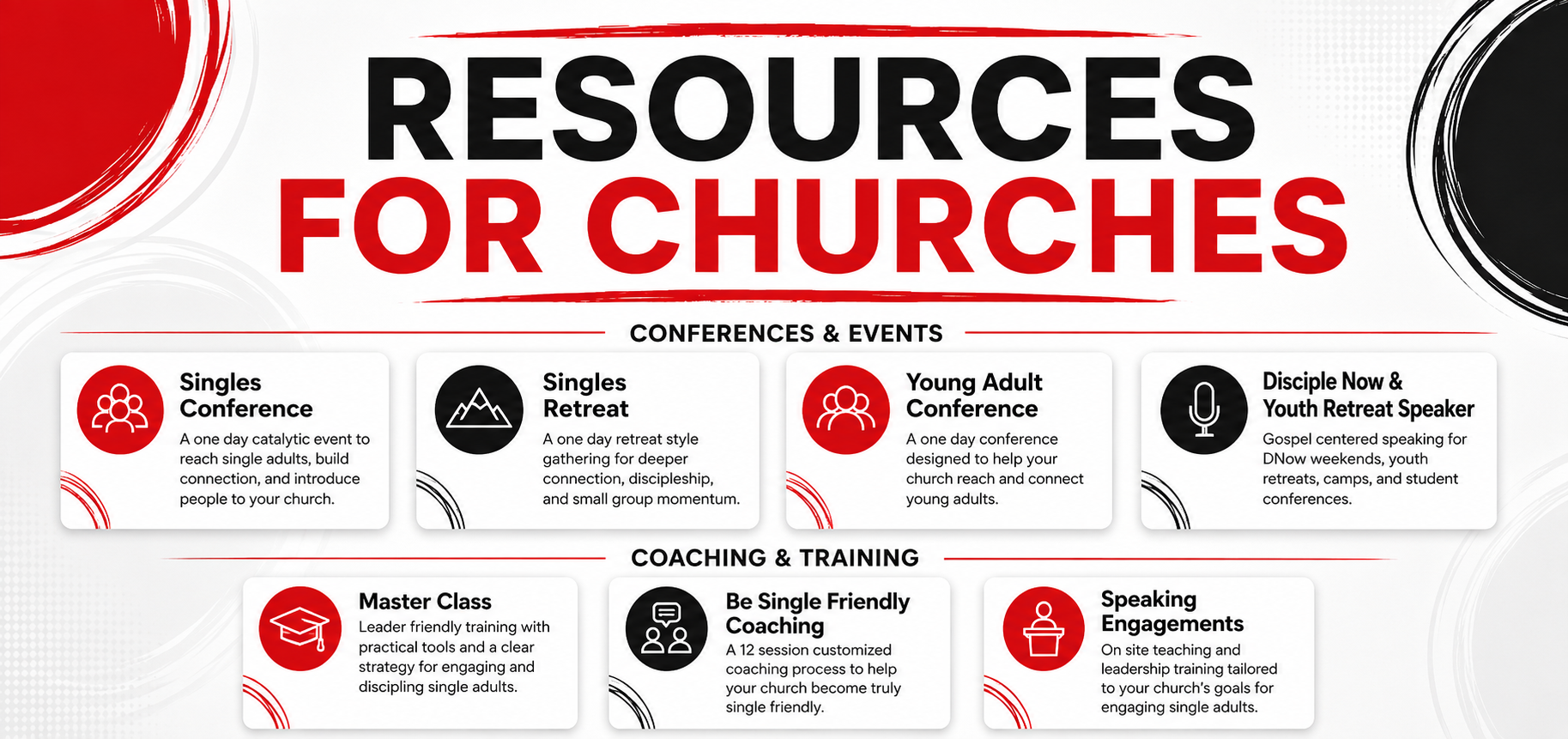
This is where Table for One Ministries can serve churches that want to reach young adults and single adults with a discipleship first approach. The goal is not to create a dating ministry or a side room for single people. The goal is to help churches become communities where single adults and young adults can be complete in Christ, connected in biblical community, and sent on mission. Churches can also explore TFO resources for Young Adult Ministry and Collegiate Singles as they build a pathway for campus engagement.
The Church Has Something Better Than Silence
The most important issue is not whether young adults have questions. They do. The issue is whether the church will be present enough, biblical enough, and relational enough to walk with them as they ask. If students learn that the church cannot handle hard conversations, they will take those conversations somewhere else. If they learn that the church can tell the truth with grace, they may discover something they did not expect. They may discover that Christian community is not a place where questions go to die, but a place where questions are brought under the lordship of Christ.
Young adults on campus are talking about war, life, politics, identity, race, violence, and immigration because they are trying to make sense of the world they are inheriting. The church should not be shocked by that. We should be ready for it. We should be ready with Scripture, ready with prayer, ready with tables, ready with names, ready with friendship, and ready with the gospel.
To reach young adults on campus, churches will have to do more than offer a program. We will have to become a people worth trusting. We will have to speak where Scripture speaks and listen where people are hurting. We will have to disciple students in public truth and private faithfulness. And we will have to remember that Jesus did not build His ministry around avoiding difficult people or difficult conversations. He moved toward people with grace and truth, and He still sends His church to do the same.
FAQ: Young Adults, Campus Ministry, and Hard Conversations
1. What do young adults want to talk about in church?
Young adults want to talk about the real questions shaping their lives, including faith, identity, relationships, politics, justice, sexuality, mental health, purpose, and belonging. They are not looking only for entertainment. They are looking for communities that can handle honest questions with biblical truth and relational care.
2. What topics are college students afraid to discuss?
According to FIRE, the most difficult topics for students to discuss openly and honestly include the Israeli and Palestinian conflict, abortion, the 2024 presidential election, transgender rights, racial inequality, gun control, and immigration. Churches should see these topics as discipleship opportunities rather than distractions from ministry.
3. How can churches reach young adults on college campuses?
Churches can reach young adults on campus by building real relationships, showing up consistently, listening well, teaching Scripture clearly, creating safe and honest discussion spaces, and connecting students to the whole church family. Campus ministry should move students from attendance to belonging, and from belonging to discipleship.
4. Should churches talk about politics with young adults?
Yes, but churches should talk about politics as a discipleship issue, not as a partisan identity. Young adults need to learn how Scripture forms their view of justice, life, authority, neighbor love, religious liberty, and public witness. The church should not avoid politics, but it must keep Christ above party.
5. How should churches talk about abortion with college students?
Churches should speak clearly about the sanctity of human life while also caring practically for women, men, children, single parents, and those carrying grief from abortion. A biblical pro life witness must include conviction, compassion, repentance, forgiveness, support, and a visible pathway of care.
6. How should churches talk about transgender issues with young adults?
Churches should teach a biblical view of creation, body, sex, identity, and discipleship while treating every person with dignity as made in the image of God. Young adults need leaders who can speak with clarity without cruelty and compassion without compromise.
7. How can churches talk about racial inequality biblically?
Churches can begin with the image of God, the sinfulness of racism, the unity of the body of Christ, and the call to love our neighbors. They should listen to real stories, teach Scripture, pursue reconciliation, and examine whether their church culture welcomes people across backgrounds.
8. What should a church do after campus violence or a gun related tragedy?
A church should respond with prayer, presence, grief care, and practical support. Students may need space to process fear, trauma, anger, and questions about safety. Leaders should avoid rushing to win an argument and instead help students bring fear and grief before Christ.
9. How can churches minister to international students and immigrant students?
Churches can serve international and immigrant students through meals, transportation, English practice, holiday hospitality, mentoring, legal resource referrals when appropriate, and gospel centered friendship. Campus ministry should see the nations as neighbors, not abstractions.
10. Why do young adults leave church, and what helps them stay connected?
Young adults often disconnect when they feel unseen, unheard, overprogrammed, underdiscipled, or unable to ask honest questions. They are more likely to stay connected when they experience meaningful relationships, biblical teaching, spiritual mentoring, service opportunities, and a church family that notices them by name.